Bill McClintock – The Art of the Mashup
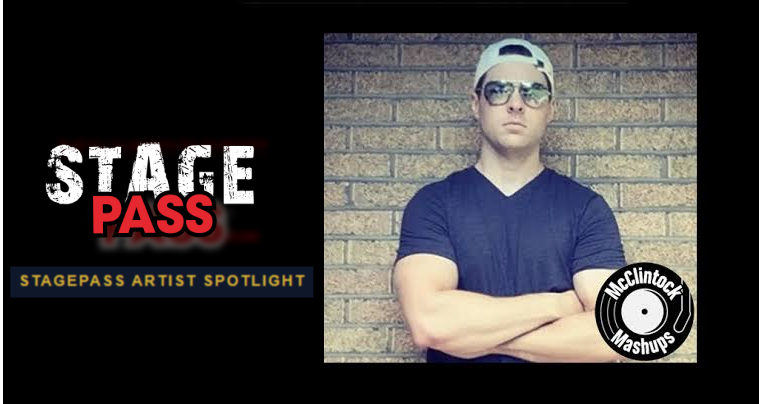
There are mashups... and then there are Bill McClintock mashups.
Bill McClintock has built a devoted following on YouTube by doing something that sounds simple until you actually hear him do it.... taking two songs from completely different musical worlds and somehow making them sound like they belong together.
RATT and Marvin Gaye. Huey Lewis and Metallica. Hall & Oates and Nine Inch Nails. Slayer and Katrina & The Waves. These are combinations that should have absolutely no business working together.... yet somehow, they do.
And that "somehow" is where Bill's musical ability comes in.
Bill is an experienced guitarist with more than 20 years of playing behind him and holds a degree in music from Duquesne University, with concentrations in Music Technology and Music Education. He is also an elementary general music teacher. While he never had a strong desire to perform in front of an audience, he found another way to share his creativity.... through the art of the mashup.
What began as a way to combine his love of music, technology and creativity eventually developed into a YouTube phenomenon. His videos have attracted hundreds of thousands, and in some cases millions, of views. InsideHook described McClintock as a YouTube sensation whose mashups were receiving between 200,000 and four million views at the time of its 2021 feature.
There Is More To It Than Putting Two Songs Together
The magic behind Bill's work is not simply choosing two funny or unexpected songs. There is a surprising amount of musical craftsmanship involved.
Bill has explained that he generally looks for songs that are in the same key and have roughly the same tempo. From there, the real work begins. He can try hundreds of combinations before finding two songs that genuinely sound as though they belong together.
He also pays close attention to rhythm, vocal phrasing, harmonic context and the way individual musical sections interact. Guitar solos, additional musical elements and unexpected changes can be added to keep a mashup from becoming predictable.
The result is something more sophisticated than a simple A + B formula. Bill's mashups often create the strange sensation that you are hearing a familiar song for the first time.
The Mashup That Put Bill On The Map
One of Bill's most recognizable creations is "I Heard it Round and Round the Grapevine," which combines Marvin Gaye's classic "I Heard It Through the Grapevine" with RATT's "Round and Round."
On paper, the combination sounds ridiculous. Motown soul and '80s hair metal are about as far apart as two musical styles can get. Yet when Marvin Gaye's vocal is placed over RATT's hard-rock instrumental, something unexpected happens.... it works.
The mashup attracted attention from music publications and was shared and discussed by fans and music outlets. Even more remarkably, RATT drummer Bobby Blotzer reached out to Bill to tell him how much he enjoyed the mashup.
It became a perfect example of what makes McClintock's work so much fun. The joke gets your attention.... but the musicality is what keeps you listening.
Musician
Bill has been playing guitar for more than 20 years and holds a degree in music from Duquesne University.
Mashup Artist
His work combines vocals, instruments and musical styles that seem completely incompatible... until Bill puts them together.
YouTube Sensation
His mashups have reached audiences numbering in the hundreds of thousands and, for some videos, into the millions.
Unexpected Is The Point
Perhaps the best way to understand Bill McClintock is to understand that the unexpected is not a side effect of his work.... it is the entire point.
He isn't looking for two songs that obviously belong together. He wants the opposite. The stranger the combination, the greater the challenge. And when the musical pieces suddenly lock into place, the result can be both hilarious and genuinely impressive.
That's why Bill's mashups have such a broad appeal. You might click because you want to hear what happens when Marvin Gaye meets RATT.... but you stay because you're hearing something that is musically clever, technically precise and completely unexpected.
Bill McClintock has taken the mashup from a simple internet novelty and turned it into a creative musical art form all his own.
Our Interview with Bill McClintock
 Ok, first of all, we’d just like to say we are big fans of your work. How long have you been doing Mashups? What started you on this path?
Bill: Thank you! That’s great to hear! I’ve been doing mash-ups for about one year now. Music has always been my thing (I’ve been playing guitar for 20+ years). However, I’ve never had the desire to perform in front of an audience. I saw making mash-ups as an opportunity to share my creativity and musical ability with an audience without actually having to be in front of people. This was after being inspired by some incredible mash-ups like Danzig’s “Mother” with Steely Dan’s “Dirty Work,” The Beatles’ “Imagine” with Van Halen’s “Jump,” and Ozzy’s “Crazy Train” with Earth, Wind & Fire’s “September.”
You seem to have a good grasp of key and tempo. Are you a musician? Do you have any musical training?
Bill: Yes. I’ve been playing guitar for the past 20 years or so and I have a degree in music from Duquesne University with a concentration in both Music Technology and Music Education.
As far as copyright laws are concerned you seem to work in a gray area. I wasn’t able to find anything specific that would preclude you from doing Mashups. Have you run into any issues with copyright? Has any artist or lawyer told you to cease and desist? Can they? I mean do they have legal footing to do so in your opinion?
Bill: YouTube has this magical thing called Content ID that somehow detects when a user uploads copyrighted material, including audio and video. Content ID has detected copyrighted material in just about every mash-up I have published to YouTube. When this happens, YouTube sends me an email as a heads-up to let me know that I used copyrighted material in my video. They don’t block the video, though, because I have agreed to run ads on my videos. Any revenue generated by my videos goes directly to the artists who own the rights to the music I use.
I have not been contacted by any artists or lawyers for any legal reasons—not yet, anyway! One artist—Bobby Blotzer of RATT—did contact me to tell me how much he enjoyed my mash-up of “Round and Round” with Marvin Gaye’s “I Heard it Through the Grapevine.” He was also hoping I could mash more RATT songs with Motown songs with the intention of recording a RATT mash-up album.
I’ve noticed that the tunes that you mash are so far apart when it comes to style etc. and yet you make them work perfectly. How do you come up with the ideas? Do songs have to be in the same key? What is similar enough that you think these two songs will work well together?
Bill: My goal is always to mash two or more songs that should in no way, shape or form go together, and make them work. I’ve found that this is the key to blowing peoples’ minds!
Musical style really isn’t important when finding two songs that are compatible. First and foremost, the two songs need to be in the same key and have the same tempo, or at least be close. I use music software that can adjust the key and tempo of a song to make it match exactly with another song.
Another important aspect is rhythm. By that I mean that there should be rhythms in both the vocal line and the instrumental track that work well together. This is something that is difficult to explain but it can definitely be heard and contributes to a “good fit” between two songs.
The timing of the vocal line with all of the musical elements in the instrumental track is crucial. If a vocal phrase is two measures long, the instrumental track should allow for those two measures without any fills or accents that would detract from the vocals. This is difficult to explain without an example. Listen to the mash-up I did of the Guess Who’s “American Woman” with Earth, Wind & Fire’s “Shining Star.” There is a four measure section that has a horn accent on the “and of 4” in each measure. There is just enough space at the end of each vocal phrase that allows for those accents- “Don’t come a-hangin’ around my door” <accent> “I don’t wanna see your face no more” <accent> etc.
One more thing that I absolutely love is taking a vocal line that was originally sung over just one chord and putting it with an instrumental track that has chord changes. Hearing a vocal line in a different harmonic context makes the vocal line itself sound different, even though I didn’t change it at all! Some good examples of this concept can be found in the Eric Clapton/Michael Jackson and Gwen Stefani/Bee Gee’s mash-ups I did.
Do you use specialized software? Are you ok with giving them a plug or would you prefer to keep it a trade secret?
Bill: I do. I use The Amazing Slowdowner to adjust tempo and key, Melodyne to adjust individual pitches, and Garageband to mix everything together. All of these things could easily be accomplished with one program like Logic Pro X, but I still haven’t upgraded. Once I have the audio finished, I use iMovie to edit the videos from each song together with the music.
Which of your mashups got the most views?
Bill: “I Heard it Round and Round the Grapevine.” This actually really surprised me because I personally didn’t think it was over the top awesome like so many people did. I can see why people like it, though. First of all, it’s Marvin Gaye with RATT, which is hysterical, and just wrong on so many levels. Marvin’s high notes are somehow transformed to heavy metal-like screams when they are put into a metal context. And, by some miracle, the rhythms of Marvin’s vocal line fit better with the “Round and Round” instrumental track than Stephen Pearcy’s. I honestly just got lucky there. Didn’t have to change a thing.
What are you working on right now?
Bill: Nothing. Just kidding. I’m currently gathering ideas to try to find a good match. I would like to do another classic rock, yacht rock, or Motown vocal with a metal instrumental track. That’s one of my favorite formulas. But, you’ll have to wait and see!